
US Open tennis predictions — betting guide at BetWhale
Flushing Meadows hosts the final Grand Slam of 2026 from August 23 through September 13, bringing 256 players to compete under the legendary New York lights. Carlos Alcaraz and Aryna Sabalenka return as defending champions, each seeking to add another US Open trophy to their collections. This US Open tennis predictions guide delivers actionable insights for bettors — covering Laykold surface analysis, night session dynamics, first round upset patterns, and tournament winner futures that can shape your wagering strategy throughout the fortnight.
US Open 2026 — key facts, dates & format for bettors
The USTA Billie Jean King National Tennis Center in Queens hosts all matches on Laykold hard courts with medium-fast speed ratings. Fan Week and qualifying begin August 18, main draw action starts August 31, and championship matches conclude September 12-13. Prize money hit $90 million in 2025, awarding singles champions $5 million each — the richest purse in tennis history.
Arthur Ashe Stadium & night sessions — impact on US Open tennis predictions
 Arthur Ashe Stadium seats 23,771 spectators beneath a retractable roof, making it tennis’s largest venue worldwide. Night sessions create unmatched electricity — louder crowds, intense energy, and psychological pressure that separates mentally tough competitors from those who wilt under scrutiny. Louis Armstrong Stadium and Grandstand host outer court battles with their own passionate New York audiences ready to create drama.
The US Open night session atmosphere generates more crowd-driven upsets than any other Grand Slam scenario. Seeds facing aggressive underdogs in prime-time slots encounter significantly higher upset risk compared to identical matchups on afternoon outer courts. Crowd pressure on player performance works both ways — favorites either feed off the energy or suffocate under thousands of screaming fans expecting entertainment.
Laykold hard court — how US Open surface shapes tennis predictions
Laykold delivers consistent ball bounce with medium-fast pace, playing quicker than Roland Garros clay but slower than Wimbledon grass. This middle-ground speed rewards aggressive baseliners with powerful groundstrokes alongside players possessing strong first serves and high-percentage returns. Hard court performance metrics reveal surface-specific win rates that often diverge dramatically from overall rankings — a player ranked 15th overall but 8th on hard courts represents genuine value.
Summer hard court form tracking through Cincinnati and Montreal/Toronto results proves essential for accurate projections. Players dominating those August events typically carry momentum directly into Flushing Meadows. Surface specialists frequently outperform their seedings when conditions match their strengths.
US Open tennis predictions 2026 — men’s contenders at BetWhale
The men’s bracket features Carlos Alcaraz, Jannik Sinner, and Novak Djokovic as clear favorites, with American players enjoying significant home support throughout the tournament.
Carlos Alcaraz — defending champion predictions
Alcaraz arrives as ATP No.1 and reigning champion following his 2025 triumph over Sinner (6-2, 3-6, 6-1, 6-4). His two US Open titles (2022, 2025) and six Grand Slams overall — including the Career Slam completed at Australian Open 2026 — establish him as the man to beat. Head-to-head against Sinner stands 10-5, and the New York crowd has adopted him as a favorite, transforming what should be neutral ground into a supportive environment.
Jannik Sinner — redemption at Flushing Meadows predictions
Sinner occupies ATP No.2 after three consecutive Grand Slam final losses to Alcaraz across Australian Open 2026, US Open 2025, and Roland Garros 2025. The US Open remains the missing piece for his Career Grand Slam collection. Hard courts suit Sinner’s game perfectly, and motivation heading into Flushing Meadows should reach maximum levels after repeated heartbreak. Draw bracket difficulty evaluation becomes crucial — avoiding Alcaraz until the final gives him a realistic championship path.
Novak Djokovic & US Open history predictions
Djokovic brings four US Open titles and 24 Grand Slams into the tournament as a 41-year-old veteran running a selective schedule. Late season fatigue monitoring shows he picks spots carefully now, but tournament path probability forecasting often undervalues his experience advantage. When preparation aligns with favorable draw placement, Djokovic remains capable of defeating anyone regardless of age.
Home favourites & dark horses — US Open tennis predictions
Taylor Fritz, Tommy Paul, Ben Shelton, and Frances Tiafoe benefit from home crowd advantage at Flushing Meadows. Fritz has established himself as a consistent top-10 performer with powerful hard court weapons. Shelton’s massive serve creates instant upset potential against any opponent. Jack Draper improves rapidly on hard surfaces following Wimbledon success, while Alexander Zverev maintains steady Grand Slam contention across all surfaces.
| 🎾 Player | 🏆 ATP rank | 📊 US Open record | 💪 Hard court form | 🎯 Prediction |
|---|---|---|---|---|
| Carlos Alcaraz | No. 1 | 2x champion | ⭐ Excellent | Title favorite |
| Jannik Sinner | No. 2 | Runner-up 2025 | ⭐ Excellent | Top contender |
| Novak Djokovic | No. 3 | 4x champion | ⚡ Monitor | Value if fit |
| Taylor Fritz | No. 6 | QF best | ✅ Strong | American pick |
| Ben Shelton | No. 12 | SF 2023 | 📈 Rising | Upset threat |
US Open tennis predictions 2026 — women’s contenders at BetWhale
The women’s bracket offers competitive depth with Aryna Sabalenka, Coco Gauff, and Iga Swiatek all capable of claiming the championship trophy.
Aryna Sabalenka — two-time defending champion predictions
Sabalenka commands WTA No.1 ranking with 10,675 points after consecutive US Open victories in 2024 and 2025 — becoming the first woman since Serena Williams (2013-14) to achieve back-to-back titles. All four Grand Slam trophies came on hard courts (Australian Open x2, US Open x2), confirming her surface dominance. Powerful baseline striking and improved serve consistency make her the most dependable hard court favorite in women’s tennis entering Flushing Meadows.
Coco Gauff — home champion predictions
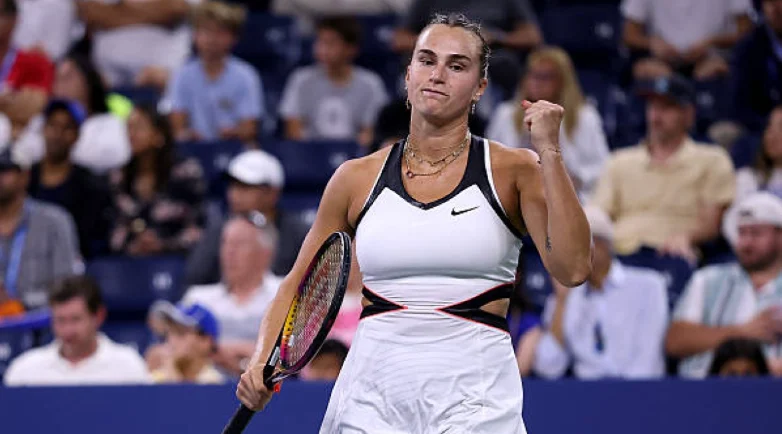 Gauff captured the 2023 US Open and carries maximum home crowd support as a New York favorite beloved by American audiences. The crowd transforms her into a psychological co-favorite even when odds suggest otherwise. Two Grand Slam titles and continued improvement at age 22 position her as a legitimate championship threat. Home crowd advantage shows Gauff gains more from New York support than any other WTA competitor.
Iga Swiatek US Open predictions
Swiatek holds WTA No.2 with six Grand Slam championships, though the US Open has proven less dominant territory than Roland Garros. Her crushing 6-0, 6-0 Wimbledon 2025 victory demonstrated rapid grass court improvement. Summer hard court form tracking through Cincinnati will indicate whether she arrives in peak condition for serious US Open consideration.
Rybakina, Andreeva & dark horse women’s predictions
Elena Rybakina won Australian Open 2026 and excels on fast hard courts with her flat, penetrating groundstrokes. Mirra Andreeva reached Roland Garros semifinals at 17 and continues rapid development. Amanda Anisimova reached consecutive Grand Slam finals at Wimbledon and US Open 2025, proving mental readiness for pressure moments. Heat and humidity endurance factors during brutal New York summer conditions may favor these younger, physically fit competitors.
| 🎾 Player | 🏆 WTA rank | 📊 US Open record | 💪 Hard court form | 🎯 Prediction |
|---|---|---|---|---|
| Aryna Sabalenka | No. 1 | 2x champion | 🔥 Dominant | Title favorite |
| Iga Swiatek | No. 2 | 1x champion | ⭐ Strong | Top contender |
| Elena Rybakina | No. 3 | QF best | ⭐ Excellent | Dangerous |
| Coco Gauff | No. 4 | 1x champion | ✅ Good | Home pick |
| Mirra Andreeva | No. 8 | R16 best | 📈 Rising | Dark horse |
US Open first round predictions — how BetWhale covers day one at Flushing Meadows
Opening rounds at Flushing Meadows create distinctive betting opportunities thanks to upset-friendly conditions and unpredictable scheduling patterns.
Why first round US Open predictions are uniquely valuable
The 128-player draw includes qualifiers who battled through Fan Week to earn main draw spots and arrive match-sharp. First round upset probability analysis confirms this tournament produces more early seed exits than Australian Open or Wimbledon combined. Night sessions pit top seeds against hungry opponents before crowds eager for drama, making US Open first round predictions particularly valuable for sharp bettors.
Top seeds first round — trap or safe bet?
Top-10 seeds win 89% of opening matches, but that 11% upset rate creates genuine betting value when properly analyzed. Qualifier and lucky loser value detection requires examining draw position (Arthur Ashe versus outer court), opponent quality, and physical condition after the summer swing. Seeds debuting on outer courts at 11 AM face different challenges than those scheduled for prime-time Arthur Ashe exposure under maximum scrutiny.
Qualifier & lucky loser upsets — first round value picks
Qualifiers defeat seeds 14% of the time at the US Open — highest among all Grand Slams by a significant margin. Three matches during Fan Week (August 18-29) give qualifiers match sharpness while main draw seeds wait and practice. Tracking qualifier results and identifying players who dominated their qualifying rounds creates opportunities for bettors willing to research beyond surface statistics.
| 🎯 Factor | 📊 Impact | 💡 Betting implication |
|---|---|---|
| 🌙 Arthur Ashe night session | +8% upset rate | Fade tired seeds |
| ✅ Qualifier with 3 wins | +5% vs seed | Back sharp qualifiers |
| ☀️ Outer court day match | -3% upset rate | Seeds safer here |
| ⚠️ Lucky loser entry | -2% vs seed | Seeds preferred |
| 💪 Post-Cincinnati rest | -4% upset rate | Fresh seeds reliable |
Tennis US Open predictions — key betting markets at BetWhale
Identifying which markets deliver optimal value at the US Open helps bettors allocate research time and bankroll effectively.
🏆 Tournament winner futures — best US Open tennis predictions
Futures markets reward proper timing above all else. Placing bets after Wimbledon (late July) captures hard court form signals before US Open odds adjust significantly. Alcaraz and Sabalenka futures tighten considerably once the draw releases. Gauff delivers annual value as a home favorite whose odds rarely reflect true winning probability given overwhelming New York crowd support behind her.
🎯 Match winner — daily tennis predictions US Open
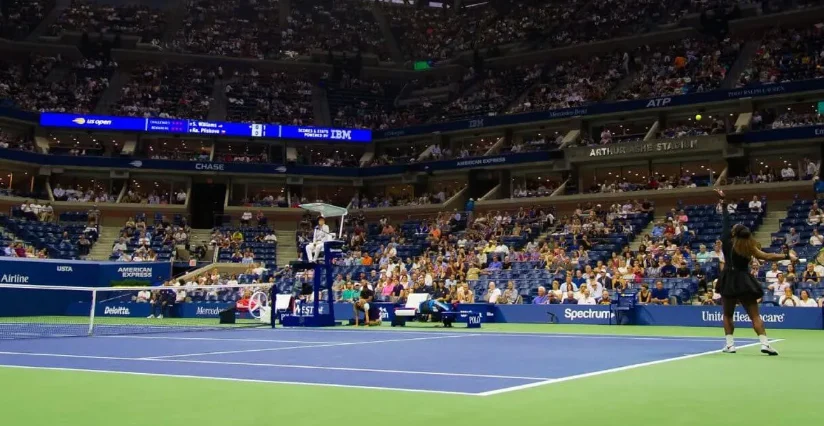 Daily match picks demand attention to scheduling details that change matchup dynamics substantially. Night session assignments become public 24 hours before play, fundamentally altering betting considerations. Live odds volatility in prime-time matches reflects Arthur Ashe unpredictability. US Open predictions should update after each order of play announcement to incorporate scheduling revelations.
📊 Set betting & tiebreaks at the US Open
Tiebreak frequency modeling shows the US Open produces first set tiebreaks in 31% of matches — highest among Grand Slams by a notable margin. This consistency creates reliable value in tiebreak markets throughout the fortnight. Momentum shifts after service breaks happen constantly in New York’s charged atmosphere, making set betting volatile but potentially rewarding for bettors reading match flow accurately.
💰 Live betting — in-play US Open predictions at BetWhale
Live wagering at the US Open offers distinctive opportunities because crowd reactions create measurable momentum swings during points. Arthur Ashe crowds influence serves directly through noise, triggering double faults at crucial moments from rattled players. Tracking break point conversion and serve percentages during matches identifies when odds overreact to temporary momentum shifts versus genuine performance changes worthy of action.
| 🎰 Market | 📊 US Open edge | 💡 Best timing |
|---|---|---|
| 🏆 Tournament winner | Draw analysis | Post-Cincinnati |
| 🎯 Match winner | Night session info | After order of play |
| 📊 First set tiebreak | 31% frequency | Any match |
| ⚡ Live betting | Crowd momentum | Arthur Ashe nights |
| 🎾 Set betting | Volatility value | Competitive matchups |
US Open tennis predictions — summer hard court swing context at BetWhale
Results from North American hard court events during August provide essential signals for Flushing Meadows projections.
Cincinnati Masters 1000 — final signal before US Open predictions
The Western & Southern Open uses identical Laykold surfaces to the US Open, making results directly transferable. Cincinnati serves as the strongest single predictor for US Open analysis. Six of the last ten US Open champions (men and women combined) reached Cincinnati semifinals that same year. Summer hard court form tracking must prioritize Cincinnati performance above all other August events when building serious predictions.
Wimbledon to US Open transition in tennis predictions
The six-week gap between Wimbledon and US Open allows surface transition from grass to hard courts. Tracking Washington and Montreal/Toronto participation identifies match-sharp players versus those who prioritized extended rest. Players accumulating 4-6 matches during August typically outperform first-week opponents who took lengthy breaks after Wimbledon and arrive rusty despite being well-rested.
Injury watch — late summer ATP & WTA withdrawals
August represents peak injury season due to compressed scheduling and demanding surface transitions from grass to hard courts. Withdrawal monitoring should begin during Fan Week (August 18) and continue throughout the main draw. The betting rule remains simple: avoid backing any player with active lower-body injury until practice sessions confirm fitness and movement quality.
| 📅 Event | 📍 Location | 🎾 Surface | 📊 US Open signal |
|---|---|---|---|
| 🏛️ Washington 500 | DC | Hard | ⚡ Moderate |
| 🍁 Montreal/Toronto 1000 | Canada | Hard | ✅ Strong |
| 🏆 Cincinnati 1000 | Ohio | Laykold | 🔥 Strongest |
| 🎾 Winston-Salem 250 | NC | Hard | ⚠️ Weak |
US Open 2026 full schedule — planning your tennis predictions at BetWhale
Knowing tournament scheduling helps bettors plan wagering strategy across both weeks of competition.
Fan Week & first round — US Open tennis first round predictions
Fan Week spans August 18-29, covering qualifying rounds and free grounds access for spectators watching future stars battle for main draw spots. Main draw begins August 31 with opening round matches extending through September 2. Order of play announcements arrive 24 hours before each session, revealing crucial scheduling details for informed first round wagering decisions.
Second week — quarterfinals to finals predictions
Round of 16 matches occur September 6-7, quarterfinals September 8-9, women’s semifinals September 11, and men’s semifinals September 12. Championship weekend runs September 12-13 with women’s final Saturday evening and men’s final Sunday afternoon. Second week predictions carry higher confidence due to larger sample sizes of tournament performance data and clearer form trajectories.
| 📅 Date | 🎾 Round | 💡 Prediction notes |
|---|---|---|
| Aug 18-29 | 🏋️ Qualifying | Scout qualifiers |
| Aug 31-Sep 2 | 1️⃣ Round 1 | Upset opportunities |
| Sep 3-4 | 2️⃣ Round 2 | Form confirmation |
| Sep 5-6 | 3️⃣ Round 3 | Bracket clarity |
| Sep 7-8 | 🎯 Round of 16 | Value decreases |
| Sep 9-10 | ⭐ Quarterfinals | Favorites reliable |
| Sep 11-12 | 🔥 Semifinals | High confidence |
| Sep 12-13 | 🏆 Finals | Best data available |
Responsible betting — US Open tennis predictions disclaimer at BetWhale
The US Open generates more first-week upsets than any other Grand Slam tournament due to unique conditions. Night sessions and passionate New York crowds create unpredictable environments that can derail logical projections. All analysis serves as informational tools helping bettors make informed decisions — not outcome guarantees. Set reasonable limits and bet within your means.