NFL Free Agency 2026: Winners and Losers From a Wild Day One
🏆 Winners
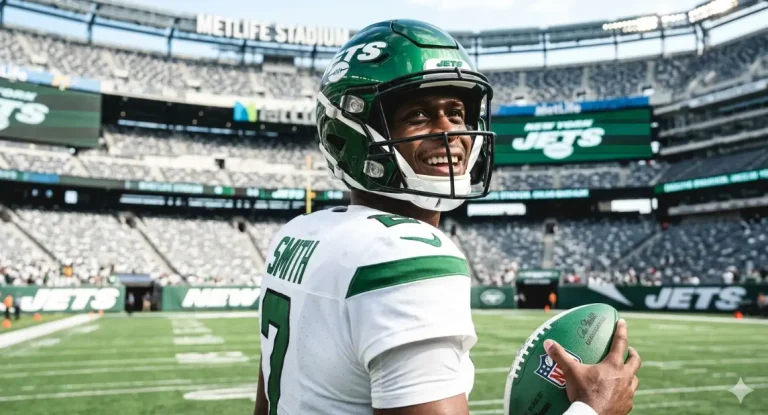
Being released by the only team you’ve ever played for isn’t how most “winners” start their day. But Tagovailoa had the Dolphins paying him $54 million in 2026 as a safety net, and Atlanta turned out to be the ideal destination. He’ll play in a dome, enters as the presumptive starter with Michael Penix Jr. recovering from a torn ACL, and inherits a Bijan Robinson-led run game. New coach Kevin Stefanski’s left-sided boot action scheme is a natural fit for a left-handed quarterback. There are real questions about how Stefanski’s under-center, play-action system will mesh with Tagovailoa’s shotgun-heavy background — but on balance, this is the best situation Tua could have landed in.
Phillips signed a four-year, $120 million deal with the Panthers — making him one of the highest-paid edge rushers in the league despite never posting even nine sacks in a season. The advanced metrics tell a different story than his raw sack totals: he generated quick pressures at the 12th-highest rate in the NFL last season and ranked seventh in total pressure rate. His low pressure-to-sack conversion rate has historically run closer to 13%, suggesting his production was significantly underrepresented in the box score. Phillips has battled torn ACL and Achilles injuries, but he earned this contract.
Panthers risk alert: At $30 million per year, this is still an enormous bet on a player who has never been a Pro Bowler and missed 22 games over his first five seasons. The Panthers appear to be overreacting to missing out on Milton Williams last year — and overpaying to make sure they don’t repeat that mistake.
The Ravens couldn’t afford to franchise tag Linderbaum at $25.8 million — so they let him walk. The Raiders immediately made him the highest-paid interior lineman in NFL history, signing him to a three-year, $81 million deal averaging $27 million per year. That’s a 50% jump from the previous center record held by Creed Humphrey. The Ravens lose one of the best young centers in football and receive nothing in return. Linderbaum will hit free agency again at 29. That’s a generational win for the player.
Los Angeles identified the problem — not enough elite coverage players — and solved it decisively. They traded four picks including a first-rounder to Kansas City for Trent McDuffie, then signed him to a four-year, $124 million extension that reset the cornerback market. They followed that by adding former Chiefs cornerback Jaylen Watson on a three-year, $51 million deal, and re-signed safety Kam Curl for three years and $36 million. The Rams were already a top-10 defense by EPA per play — now they’ve plugged their biggest weakness with two standout cornerbacks. The NFC just got a lot harder to navigate.
The second-year running back already got a boost when the Chargers hired Mike McDaniel as offensive coordinator. Then the team added center Travis Biadasz, guard Cole Strange and tight end Charlie Kolar. McDaniel’s offenses historically use far fewer three-wideout sets than Harbaugh’s — meaning more two-back and two-TE formations, more power running and a system specifically designed to unlock Hampton’s skill set. His situation improved dramatically on Day 1 without him lifting a finger.
❌ Losers
For the third straight offseason, the Texans need to build better protection around their young quarterback. Their solution this year: re-sign right tackle Trent Brown on a deal worth up to $7 million despite him missing the divisional round with an ankle injury, and hand right guard Ed Ingram a three-year, $37.5 million contract. Ingram allowed 14 quick pressures and 32 total pressures in 2025 — both worse than league average — and has been a consistent liability in pass protection. Locking him in at $12.5 million per year solves nothing. Meanwhile, Stroud and Will Anderson Jr. are both due massive extensions. The math is getting very tight in Houston.
The Ravens drafted Linderbaum in the first round in 2022 and built their offensive line around him — then watched him walk to a division rival for a record deal they structurally could not match. On top of that, the Maxx Crosby trade fell apart entirely after the physical, leaving the Ravens scrambling to pivot to Trey Hendrickson at edge rusher. Baltimore now has seven players earning over $19 million annually in 2026 and Lamar Jackson’s record extension still looming. The margin for error has essentially disappeared.
Cleveland paid $16.5 million per year for guard Zion Johnson — a player the Chargers declined to pick up his fifth-year option on. Johnson led all guards in quick pressures allowed in 2025 at a rate nearly 50% above league average and has never played at a consistent level as a pass blocker. The Titans, meanwhile, paid $19.5 million per year for Wan’Dale Robinson — a gadget receiver who has averaged just 6.4 air yards per catch over four seasons — and handed tight end Daniel Bellinger a three-year, $24 million deal despite him never topping 300 receiving yards in a single pro season.
The Broader Warning: Secondary WRs Are a Bad Investment
The Data on Free Agent Wide Receivers Is Damning
Over the past three offseasons, 15 wide receivers who would be second or third options on most rosters signed deals worth at least $7 million per year. The hit rate on those contracts has been roughly 20%. Players like Allen Lazard, Tutu Atwell, Dyami Brown and Hollywood Brown were healthy scratches or outright released within a year of signing. Despite this track record, Day 1 of free agency NFL 2026 brought more of the same: Wan’Dale Robinson at $19.5M/year to the Titans, Jalen Nailor at $12M/year to the Raiders, Rashid Shaheed at $17M/year to the Seahawks, Jahan Dotson at $7.5M/year to the Falcons. Teams keep making this mistake — and paying for it come Year 2.