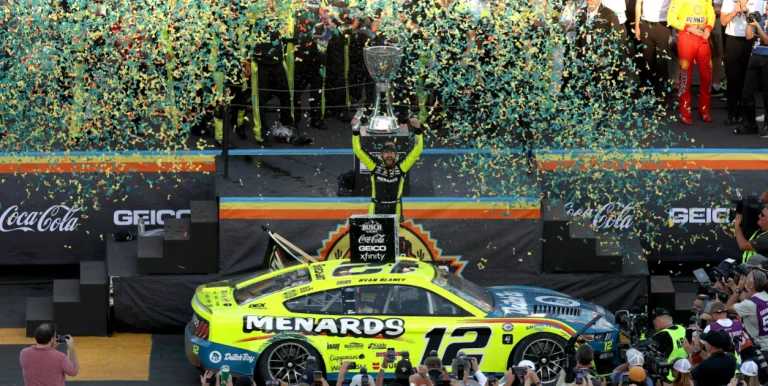
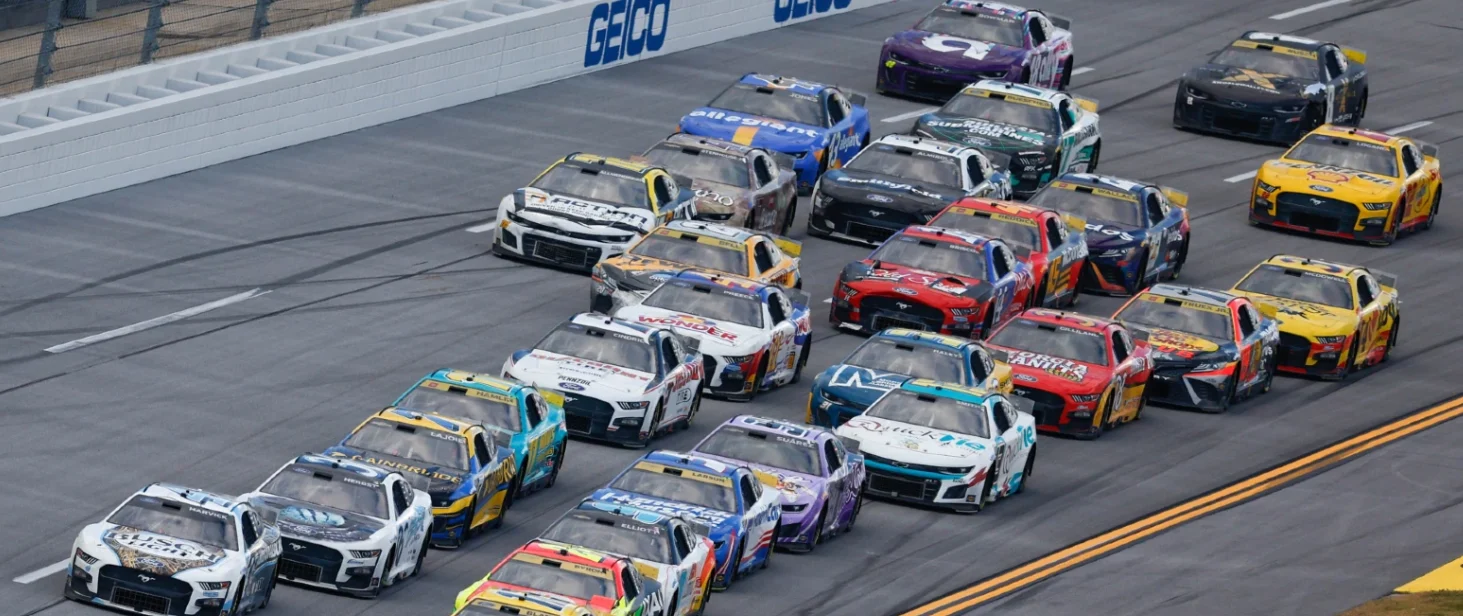
Outright winner bets in NASCAR
NASCAR betting offers diverse opportunities, but outright winner bets stand out for those seeking substantial returns. Rather than predicting individual race segments or driver matchups, this format challenges you to identify who will cross the finish line first when the checkered flag waves. The approach demands deeper research into driver-form trends and track-adaptability cues than typical race-day wagers. Smart bettors analyze momentum-build markers and race-pace dynamics to separate genuine contenders from overhyped favorites before committing funds.
🎯 Understanding outright winner bets
Outright winner bets represent the most straightforward NASCAR betting format—you select which driver will win an entire race. Unlike complex multi-leg parlays or intricate prop markets, this bet type focuses solely on identifying the eventual champion. The simplicity masks substantial profit potential, especially when underdogs with strong consistency-level signals overcome favored competitors. Your payout depends entirely on whether your selected driver finishes first, regardless of margin or lap times.
What outright winner bets are and why they’re popular
An outright winner bet requires you to predict one driver who will capture the victory before green flag drops. This format attracts bettors because it offers clear outcomes without complicated conditions or multiple contingencies. The appeal grows when considering that NASCAR best bets of this type can generate significant returns when targeting value picks rather than obvious favorites. Casual fans appreciate the straightforward nature while experienced bettors exploit field-position impact analysis to identify overlooked contenders.
Differences from race prop bets, head-to-head, and stage bets
NASCAR prop bets focus on specific race events like “Will there be a caution in the first 50 laps?” while head-to-head bets pit two drivers against each other. Stage bets concentrate on the first and second stage winners within a single race, offering quicker resolutions but smaller payouts. Outright winner bets demand comprehensive evaluation of the entire field and race distance, incorporating strategy-execution hints that might not matter in shorter-duration prop markets.
Pro tip:
📌 How odds work for NASCAR outright bets
Understanding odds formats directly impacts your betting decisions and potential profits. American sportsbooks predominantly use moneyline odds, though many platforms now offer decimal and fractional alternatives for international bettors. Each format conveys the same probability information but requires different calculation methods for determining returns. Mastering these conversions helps you quickly assess value across multiple betting sites and make informed decisions when the best NASCAR bets today present themselves.
American, decimal, and fractional odds explained
American odds use positive and negative numbers to indicate underdogs and favorites. A +300 line means a $100 wager returns $300 profit plus your original stake, while -150 requires $150 risked to win $100. Decimal odds simplify calculations—multiply your stake by the decimal to determine total return including your original bet. Fractional odds like 5/1 show profit relative to stake; betting $20 at 5/1 yields $100 profit. Most US platforms default to American odds, but recognizing competitive-tilt patterns across formats ensures you never miss advantageous lines.
Calculating potential payouts in USD and crypto
Traditional USD calculations follow straightforward formulas based on your odds format. For American odds, positive numbers divide by 100 then multiply by stake; negative numbers require dividing 100 by the absolute value then multiplying by wager amount. Cryptocurrency betting follows identical mathematical principles but requires attention to conversion rates at bet placement and settlement. Bitcoin, Ethereum, and stablecoin wagers calculate using the same odds structures, though some platforms offer crypto-specific bonuses.
| 🏎️ Driver | 📊 American odds | 📈 Decimal odds | 💰 $100 bet payout (USD) | ₿ 0.01 BTC bet payout |
|---|---|---|---|---|
| Kyle Larson | +450 | 5.50 | $450 profit ($550 total) | 0.045 BTC profit (0.055 BTC total) |
| Tyler Reddick | +600 | 7.00 | $600 profit ($700 total) | 0.06 BTC profit (0.07 BTC total) |
| Chase Elliott | +800 | 9.00 | $800 profit ($900 total) | 0.08 BTC profit (0.09 BTC total) |
| Ross Chastain | +1200 | 13.00 | $1,200 profit ($1,300 total) | 0.12 BTC profit (0.13 BTC total) |
| Daniel Suarez | +2000 | 21.00 | $2,000 profit ($2,100 total) | 0.20 BTC profit (0.21 BTC total) |
📌 Key factors influencing outright bets
Successful NASCAR bets require analyzing multiple interconnected variables that determine race outcomes. Performance-stability traits emerge from examining how drivers handle pressure during championship runs versus mid-season events. Track characteristics fundamentally alter which teams and drivers gain advantages, making historical data invaluable for predictions.
Driver form, team performance, and past results
Current season performance reveals which drivers possess winning momentum heading into each event. A driver securing three top-five finishes in consecutive races demonstrates superior form compared to competitors struggling outside the top ten. Team performance extends beyond driver skill—crew chief decisions, pit stop execution, and equipment preparation determine whether cars maintain competitive pace throughout 400-mile contests. Past results at specific tracks provide crucial context; some drivers consistently excel at certain venues regardless of overall season struggles.
Track type, conditions, and historical trends
NASCAR competes on oval, road course, and superspeedway layouts, each demanding distinct driving styles and car setups. Short tracks reward aggressive drivers willing to make contact, while superspeedways require drafting expertise and pack-racing intelligence. Historical trends show certain manufacturers dominate specific track types; Chevrolet might excel on intermediates while Toyota performs better at short ovals. Temperature and weather forecasts matter significantly since rain can cancel races or alter strategy completely.
Qualifying position, pit strategy, and car performance
Starting position influences race outcomes more at certain tracks than others. Road courses and short ovals make passing difficult, giving pole sitters substantial advantages, while superspeedways allow easy position changes. Pit strategy separates championship teams from mid-pack competitors—choosing two versus four-tire stops at critical moments can gain or lose track position permanently. Car performance metrics like straightaway speed, cornering ability, and tire degradation rates emerge during practice sessions.
💡 Factors to consider before placing outright bets
✅ Recent finishing positions – review last five races for consistency patterns
✅ Track-specific history – check driver’s previous results at this venue
✅ Practice and qualifying speed – fast practice times often translate to race performance
✅ Crew chief experience – veteran chiefs make better in-race adjustments
✅ Weather forecasts – rain or extreme heat can shuffle the competitive order
✅ Starting position – track type determines how crucial qualifying placement becomes
🌍 Popular NASCAR events for outright betting
Major NASCAR events attract enormous betting volume and offer the deepest markets with most competitive odds. Championship implications and massive prize money elevate competition levels beyond regular season races. Understanding which events provide optimal betting opportunities helps maximize profit potential while avoiding races where unpredictability makes informed predictions nearly impossible. The best NASCAR odds today often emerge during marquee events when public attention creates market inefficiencies.
Daytona 500, Brickyard 400, and playoff races
The Daytona 500 opens each season as NASCAR’s most prestigious event, drawing enormous wagering handle and national media coverage. Superspeedway racing’s pack dynamics create higher unpredictability, but the event’s importance means top teams bring optimized equipment. The Brickyard 400 at Indianapolis Motor Speedway carries historical significance that motivates drivers and teams to peak performance. Playoff races feature limited fields of championship-eligible drivers, theoretically simplifying handicapping by removing weaker competitors.
Using event prestige and field competitiveness to find value
Prestige events attract public betting action that often inflates favorites beyond their true winning probability. Casual fans gravitate toward recognizable names without considering track-adaptability cues that might favor less popular drivers. This creates value opportunities on overlooked contenders with strong venue-specific histories. Analyze field competitiveness by examining how many drivers enter with realistic winning chances—races featuring six genuine contenders offer NASCAR bets value than those with clear two-driver favorites.
| 🏁 Event | 🛣️ Track type | 👥 Average field | 🎯 Favorite’s odds | 💎 Underdog range |
|---|---|---|---|---|
| Daytona 500 | Superspeedway | 40 drivers | +600 to +800 | +1500 to +5000 |
| Coca-Cola 600 | Intermediate oval | 36-38 drivers | +400 to +600 | +1200 to +3000 |
| Brickyard 400 | Oval/road course | 36-38 drivers | +500 to +700 | +1500 to +4000 |
| Southern 500 | Intermediate oval | 36-38 drivers | +450 to +650 | +1200 to +3500 |
| Championship Race | Intermediate oval | 4 drivers | +200 to +300 | +400 to +1000 |
💡 Advanced outright betting strategies
Moving beyond basic race winner predictions requires incorporating multiple betting markets and live information to maximize edge. Professional bettors rarely place single outright wagers without considering complementary positions that provide insurance or enhanced profitability. Understanding how different bet types interact allows construction of sophisticated betting portfolios that profit regardless of which specific scenario unfolds.
Combining outright bets with stage and prop markets
Placing an outright winner bet on a driver priced at +600 offers substantial profit potential but carries significant risk if your selection finishes second or third. Combining this with stage winner bets on the same driver creates multiple profit opportunities throughout the race. Additionally, prop bets like “Will your driver finish top 5?” at -150 provide safety nets. When targeting underdogs for outright victories, balance risk by betting favorites in prop markets where their consistency matters more than outright winning.
Adjusting bets based on qualifying and live race updates
Qualifying results sometimes contradict practice session expectations, revealing setup improvements or emerging mechanical issues. If your targeted driver qualifies poorly due to equipment problems rather than lack of speed, odds might drift creating enhanced value if teams rectify issues before race day. During races, live betting markets update constantly based on field position and race developments. Sharp bettors monitor leader lap times, tire wear progression, and pit stop cycles to identify opportunities where live odds don’t reflect actual winning probability.
📋 Steps to place smarter NASCAR outright bets
1️⃣ Research driver and team form – examine last 5-10 races for performance trends
2️⃣ Study track-specific data – review historical results at the upcoming venue
3️⃣ Monitor practice and qualifying – fast speeds indicate race-day competitiveness
4️⃣ Check weather forecasts – rain delays or temperature changes affect strategies
5️⃣ Compare odds across sportsbooks – find the best available lines
6️⃣ Consider field competitiveness – assess how many legitimate contenders exist
7️⃣ Place bets at optimal timing – depending on whether you want best odds or most information
8️⃣ Set proper stake sizing – risk appropriate amounts based on confidence level
⚠️ Common mistakes in outright betting
Even experienced bettors fall into predictable traps that erode long-term profitability when wagering on race winners. Understanding these pitfalls helps avoid costly errors that transform winning strategies into losing propositions. Many mistakes stem from emotional decision-making or insufficient research rather than fundamental misunderstanding of NASCAR bets themselves.
Pro tip:
Overestimating favorites without context
Favorites carry low odds because most bettors back them, not necessarily because they possess overwhelming winning probability. A driver priced at -150 might seem safe but requires risking $150 to profit $100—a single loss erases gains from multiple victories. NASCAR’s competitive balance means even dominant drivers rarely win more than 15% of races in a season. The public often overvalues big-name drivers experiencing slumps while undervaluing emerging talents displaying superior consistency-level signals.
Ignoring driver or team trends
Recent performance trends reveal crucial information about current competitiveness that past season statistics mask. A driver winning three years ago at a specific track matters less than struggling through the last five races with mechanical failures or setup issues. Team personnel changes significantly impact performance—new crew chiefs need time implementing different strategies and communication styles. Ignoring these trends because historical data suggests different outcomes leads to backing drivers whose circumstances have fundamentally changed.
Betting without monitoring odds fluctuations
NASCAR bets shift constantly based on betting volume, news developments, and expert opinions. Placing bets days before races without checking for line movements might mean missing better prices available closer to green flag. A driver opening at +800 might drift to +1000 if qualifying disappoints or tighten to +600 if practice sessions impress. Understanding why odds change provides insights into market sentiment and sharp money movements.
| ❌ Common mistake | ⚠️ Typical consequence | ✅ How to avoid |
|---|---|---|
| Betting heavy favorites constantly | Requires multiple wins to overcome one loss | Seek value beyond obvious choices |
| Ignoring qualifying results | Miss warning signs about car performance | Check starting positions before finalizing bets |
| Chasing losses with larger bets | Accelerated bankroll depletion | Maintain consistent staking regardless of results |
| Overlooking track type differences | Back drivers unsuited to venue characteristics | Study track-specific performance histories |
🏆 Case studies – successful outright bets
Examining specific examples of profitable and unprofitable outright wagers provides practical lessons that improve future betting decisions. Real-world scenarios demonstrate how theoretical principles apply during actual races when money hangs in the balance. Professional bettors develop expertise through pattern recognition that only emerges from studying numerous outcomes across different contexts.
Drivers who delivered big payouts
Austin Cindric’s 2022 Daytona 500 victory at +6000 odds created legendary payouts for bettors who recognized his superspeedway proficiency despite limited Cup Series experience. His Team Penske equipment and road course success translated to restrictor-plate racing, but casual fans dismissed him as inexperienced. Ross Chastain’s 2022 Talladega win at +4000 demonstrated how aggressive driving styles excel at superspeedways when combined with fearless decision-making. These longshot victories shared common traits: drivers with specific skill sets matching track requirements, quality equipment from elite teams, and public underestimation creating inflated odds.
Lessons from unsuccessful bets
Backing Kyle Busch as heavy favorite at short tracks during his 2022 struggles illustrates the danger of reputation-based betting. Despite historical dominance, equipment changes and team dynamics deteriorated his performance, yet odds failed reflecting this decline quickly. These failures teach that even justified favorites face variance, and proper bankroll management matters more than picking winners.
How pros exploit outright trends
Professional NASCAR bettors identify patterns that casual fans overlook, creating exploitable edges in outright markets. One trend involves targeting drivers who qualify poorly but demonstrate fast race pace during practice sessions—this combination often produces enhanced odds while maintaining strong winning probability. Pros also exploit manufacturer advantages at specific track types, backing Toyota drivers at short ovals or Chevrolet teams at superspeedways based on equipment performance data.
| 🔢 Step | 📝 Action taken | 🧠 Reasoning | ✅ Outcome |
|---|---|---|---|
| 1 | Identified Ryan Blaney at Pocono (+1200) | Strong track history with 3 top-fives in last 5 races | Odds offered value despite recent form |
| 2 | Confirmed fast practice speeds | Ranked 2nd in final practice session | Equipment performance verified |
| 3 | Checked pit crew statistics | Team averaged 13.2-second stops, best in field | Minimized risk of losing positions |
| 4 | Compared odds across sportsbooks | Found +1400 at alternative platform | Secured extra 200 points of value |
| 5 | Placed calculated stake | Risked 2% of bankroll ($50) | Appropriate risk management |
| 6 | Blaney won the race | Led final 30 laps after late restart | $700 profit from $50 stake |
FAQ
How do outright bets work in NASCAR?
You select one driver to win the race, and if they finish first, you collect the payout based on pre-race odds. The bet resolves only when the checkered flag waves and final positions are official.
Can underdogs be profitable in outright betting?
Yes—NASCAR’s competitive balance means longshots win more frequently than in other sports, making underdogs valuable when you identify legitimate contenders that public betting overlooks.
How do track conditions affect outright odds?
Weather changes and track surface temperatures alter car handling, potentially favoring drivers skilled in specific conditions. Rain can eliminate speed advantages while creating opportunities for drivers excelling in unpredictable situations.
Which websites provide accurate NASCAR stats in the USA?
NASCAR.com offers official statistics, while Racing-Reference.info provides comprehensive historical data and Racing Insights delivers advanced analytics for serious bettors researching performance metrics.
How to calculate payouts in USD and crypto for outright bets?
For American odds, positive numbers show profit per $100 wagered while negative numbers indicate stake required to win $100. Crypto follows identical math but locks conversion rates at bet placement, so verify the exchange rate before confirming wagers.